
What We Didn't Talk About While Covering Those 2025 Elections: Reproductive Rights And Women Voters
Ramos | CLMI
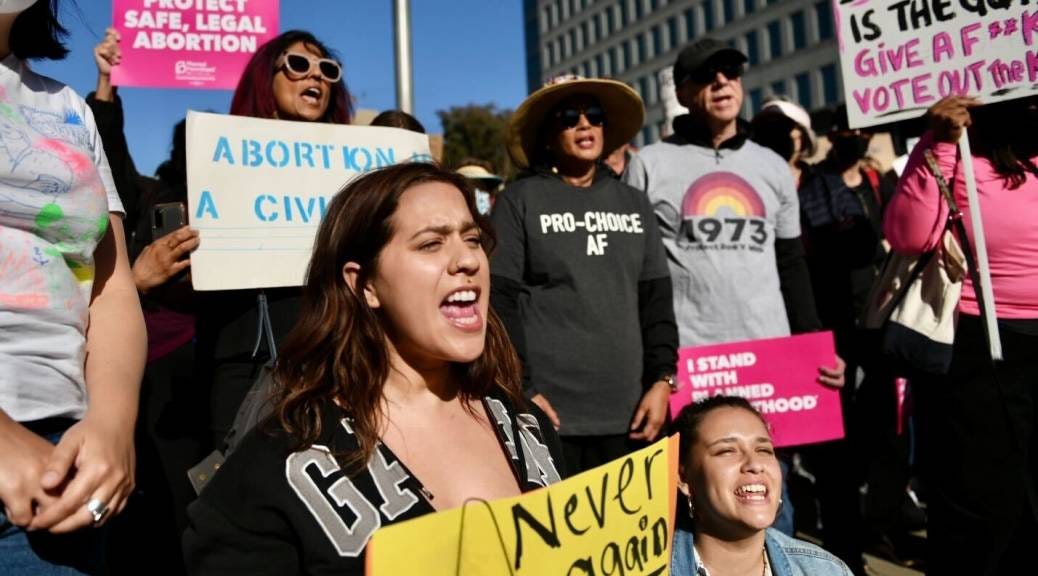
One common theme in recent critical statewide elections in Virginia and New Jersey that more than likely played a critical role in across-the-board voter rejection of President Trump was abortion. Women voters dominated the first fresh test elections for Democrats and Republicans on the eve of 2026 midterm House and Senate races, as well as state gubernatorial and legislature races. Reproductive rights is a heavy and very controversial topic - and, clearly, it motivated voters, especially women voters. A non-stop plastering of Democratic-candidate television and other media platform ads designed to draw women focused in on the threat of Republican elected officials imposing abortion bans on women. The strategy was successful.
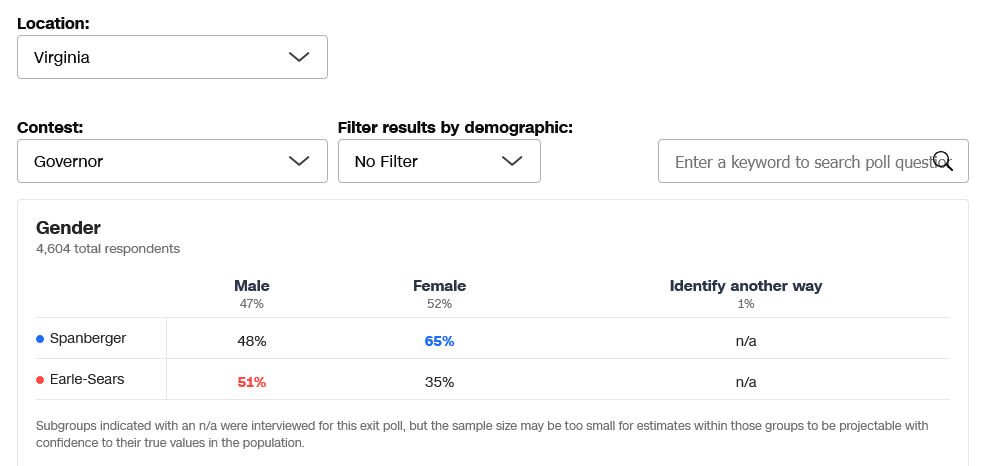
As threats to reproductive access escalate, women voters played the role of most decisive voters in major state-level elections as CNN exit polling shows in the recent Virginia race …
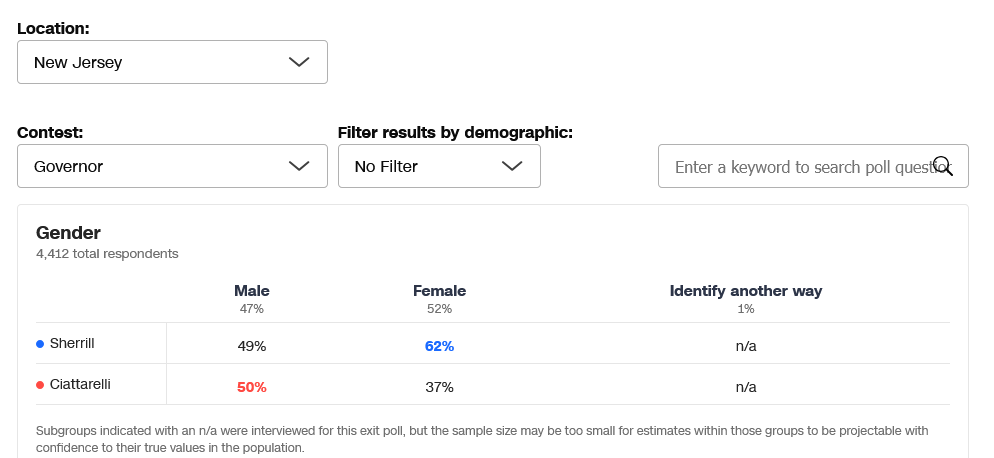
And the New Jersey gubernatorial race, as well …
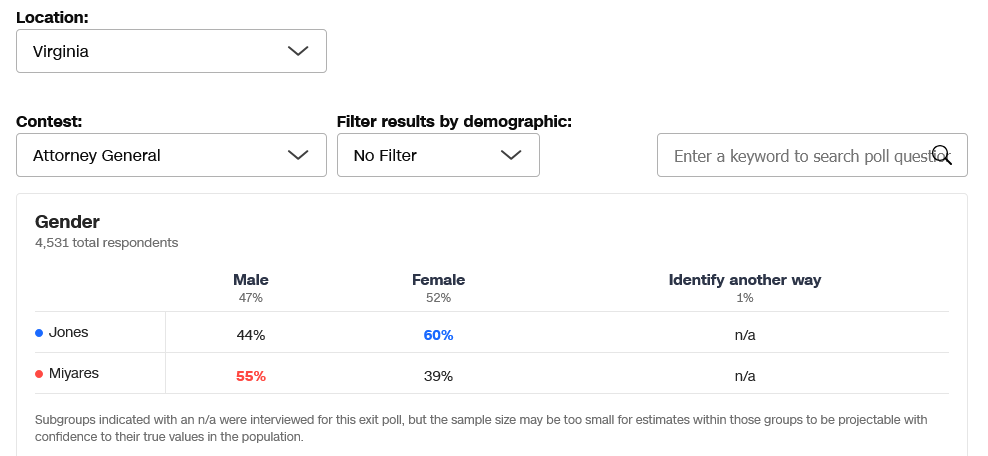
In the Virginia election, Democratic candidate for Attorney General Jay Jones was able to fend off a tsunami of attacks in the aftermath of a texting scandal. Yet, after he released his own wave of ads pleading with women to vote against anti-abortion and Trump supported Republican incumbent Jason Miyares, the tables turned …
Mainstream analysis and discourse on the 2025 elections, however, failed to capture the undercurrent of female voter discontent, not just in terms of dissatisfaction with the president’s overall agenda, but fear that the administration, along with Republicans in states, was engineering the complete destruction of reproductive rights.
Project 2025
But the plan for this was never a secret. In April 2023, conservative think tank known as The Heritage Foundation released an over 920-page detailed policy plan dubbed “Project 2025.” During the 2024 election, however, then-candidate Donald Trump disavowed himself from it as Democratic candidates from opponent Kamala Harris to other federal and state candidates down ballot used the book as a centerpiece of their warnings that democracy faced an existential threat. So far, those warnings have come to fruition, particularly in terms of abortion access, as the Reproductive Freedom for All tracker shows …
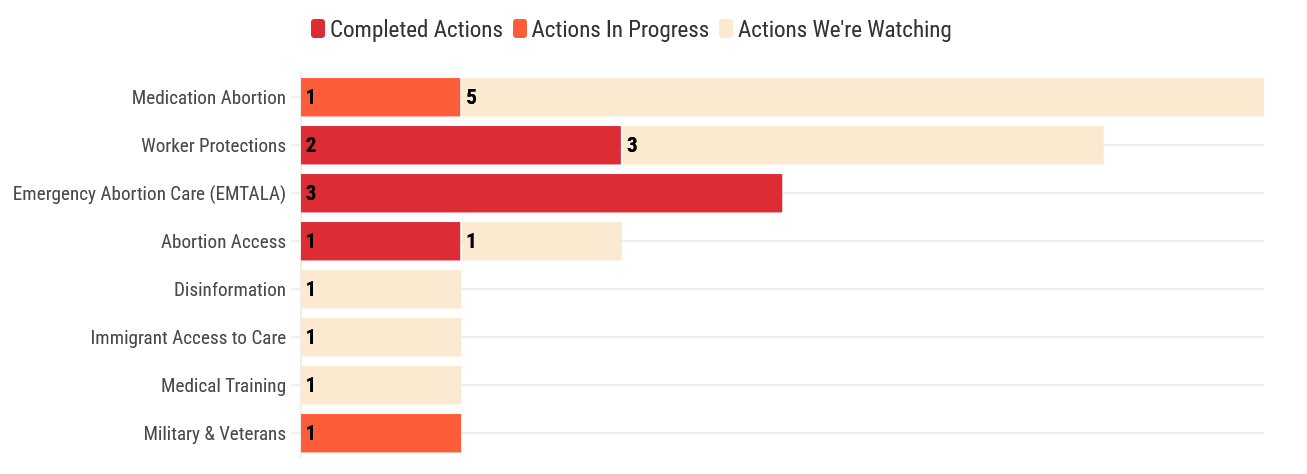
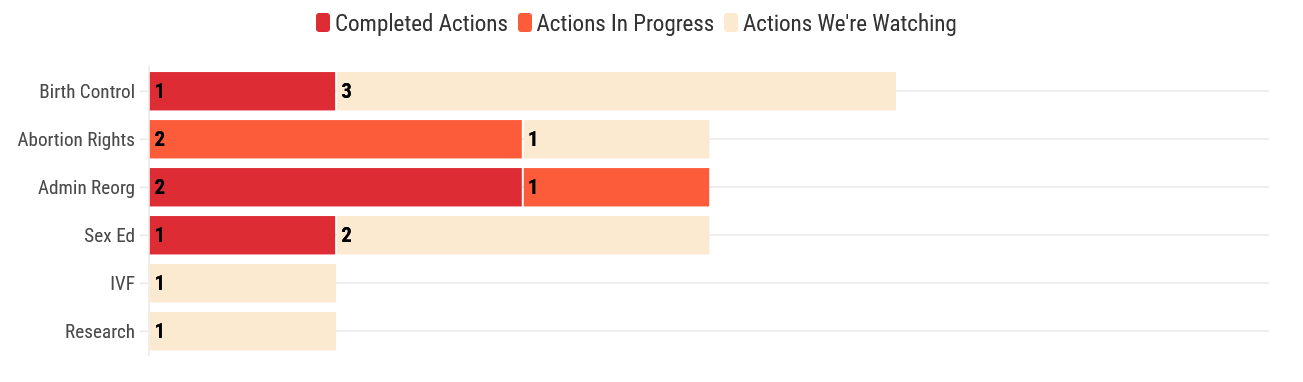
Fast-forward to 2025, and the public is feeling the effects of Project 2025 policy implementation as it seeks to “… dismantle the administrative state,” just as it said it would do. But most troubling to women is the intensification of anti-abortion policies being heralded by the Trump administration. This was not surprising - Project 2025 pushed for it in 2024 and the current president is veritably aligned with its goals. As Bridget Winkler at the National Women’s Law Center argued in a 2024 briefing …
Project 2025 advocates for a national ban on medication abortion by urging the FDA to reverse its approval of mifepristone and misoprostol, two pills used in the medication abortion regime that is the most common form of abortion in the U.S. Despite the extensive safety record of medication abortion, Project 2025 authors use bogus junk-science rhetoric to falsely characterize this vital and safe procedure as “dangerous to women.” Medication abortion helps fill the gaps in abortion access that have arisen since Dobbs and the closure of so many clinics, so a ban on this critical medication would only further devastate access nationwide.
Project 2025 also urges the DOJ to criminalize mailing of medication abortion pills via enforcement of the Comstock Act, a centuries old relic written in 1873, nearly 50 years before (mainly wealthy white) women even had the right to vote. Project 2025 proposes using this musty, dusty, moth-ball smelling law to criminalize anyone who sends or receives abortion pills anywhere in the country, even though Comstock has been considered unenforceable by the courts and Congress for nearly a century.
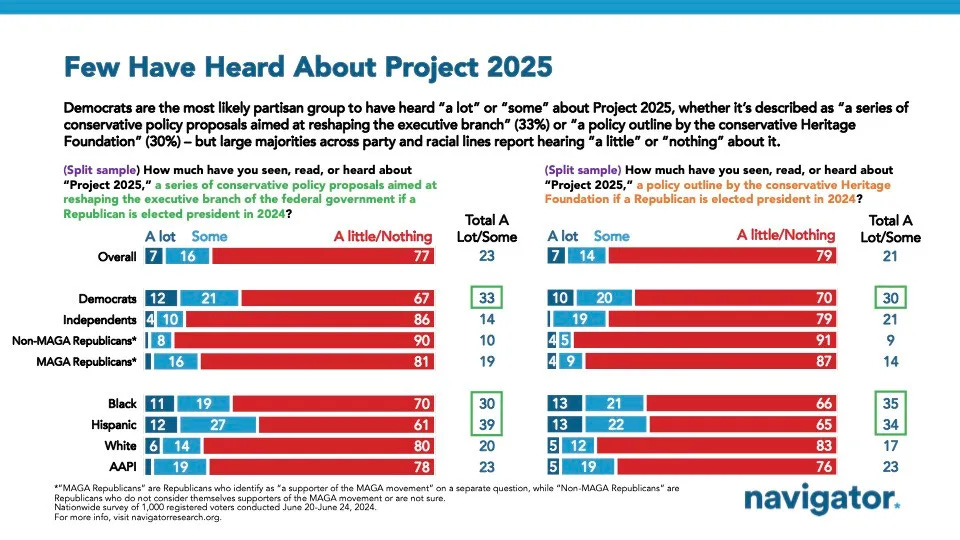
Yet, rewind to 2024, and few people were hearing anything about Project 2025 …
The Destruction Of Planned Parenthood
Do these rapid changes throughout the reproductive care landscape mean the end of abortion access and care centers like Planned Parenthood? Pressure to do so is increasing with centers already shuttering in major states, particularly with the elimination of needed federal funds. Meanwhile, administration threats to Medicaid and other forms of preventative healthcare make access to urgent medical response that much more difficult - especially for low-to-moderately income women. As of June 2025, almost 20 Planned Parenthood clinics were closed or were planning to close soon, truly showing how consequential federal government funding is to these critical access points, and how at risk the right to healthcare and treatment for women is becoming obsolete. Since the Supreme Court overturned Roe v. Wade in 2022, clinic closures have risen exponentially …
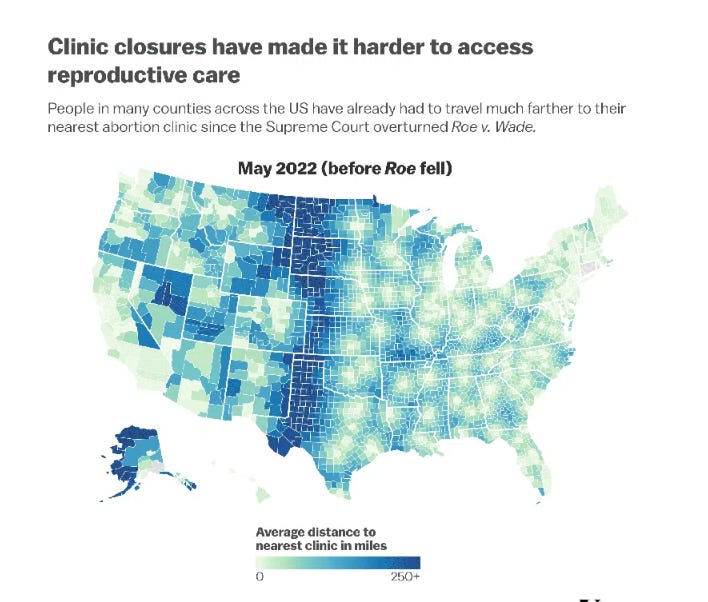
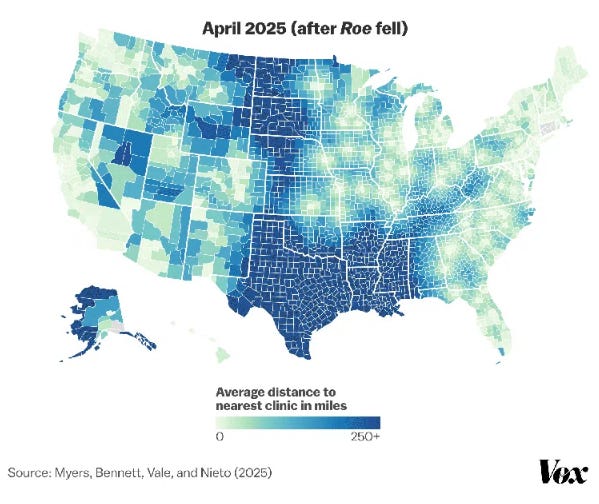
Those closures are increasing as the landmark One, Big, Beautiful Bill passed by Congress and signed into law this past summer. As Vox reported …
[The One, Big Beautiful Bill] directly threaten[s] reproductive care by defunding Planned Parenthood and other abortion providers, [and] it would also incentivize insurers for Affordable Care Act plans in some states to drop abortion coverage or make it significantly more expensive.
And it would slash Medicaid coverage, impacting Americans’ ability to access medical care of all sorts. Though Medicaid funds cannot fund abortions except under very narrow circumstances, the cuts would threaten access to non-abortion reproductive care. Many abortion providers, including Planned Parenthood, also offer health care in the form of contraceptives, treatment for sexually transmitted diseases, and cervical cancer screenings.
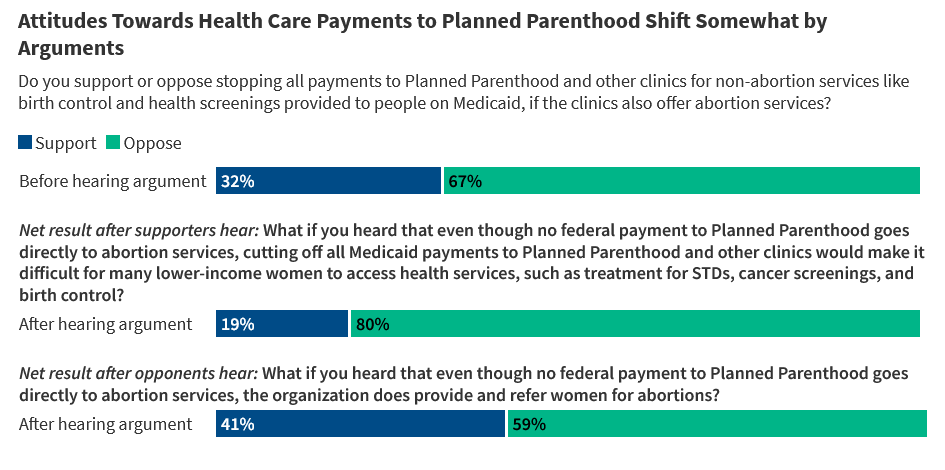
Interestingly enough, Kaiser Foundation polling found that the more information revealed to the public about defunded abortion and reproductive care access in the One, Big, Beautiful bill resulted in greater opposition to it …
Are Declining Birth Rates Contributing To Anti-Abortion Sentiments?
Maybe so, according to conservatives and the authors of Project 2025. As the cost of living increases across the United States, the amount of women giving birth in their lifetime decreases. The Centers for Disease Control during the Biden administration discovered that “… from 2014 to 2020, the [birth] rate consistently decreased by 2% annually” …
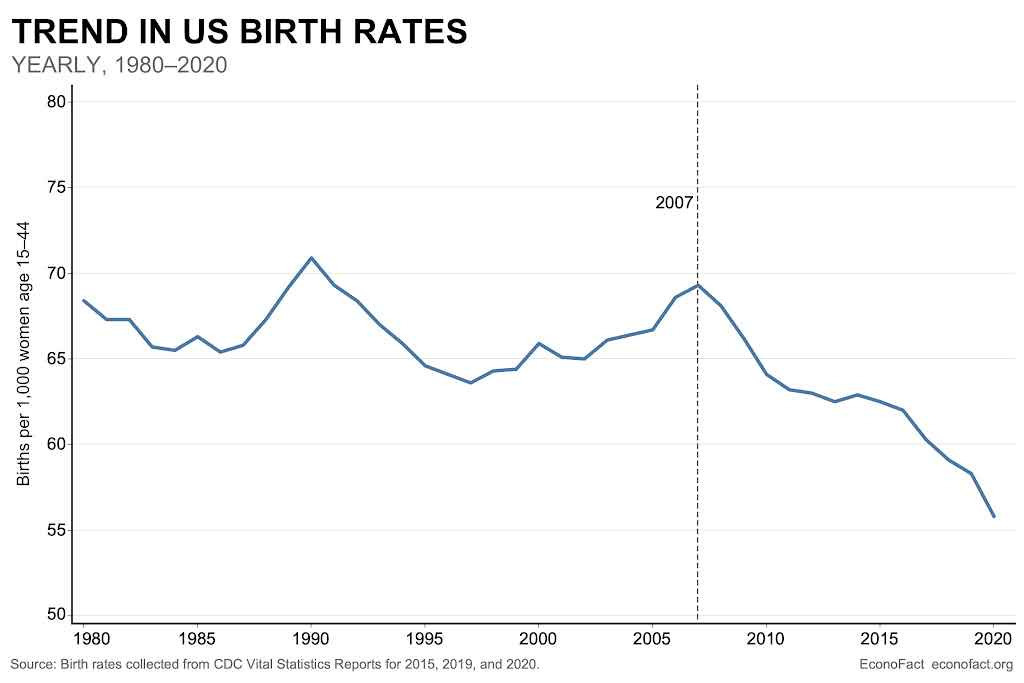
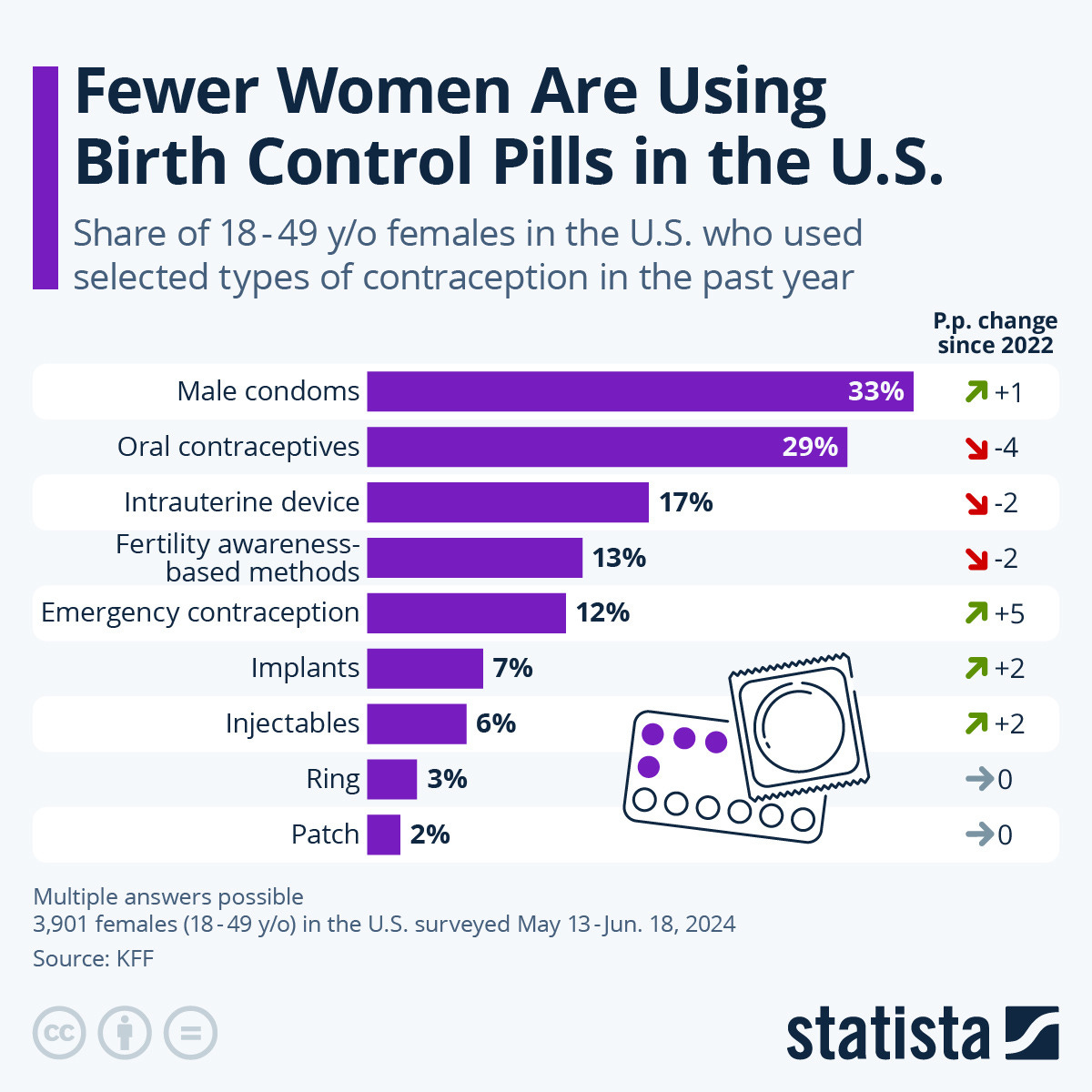
Not only is this because of increased cost of living, but society’s view of what a traditional family looks like is changing as many couples want to avoid the stress and cost of raising a child in the 21st century. Although some might argue this isn’t a suitable reason for American couples to cease having children altogether, it may explain the frantic nature of the political right’s fervent crackdown on reproductive rights. Fears over declining birth rates and an aging society have stoked conservative debates for some time. Still, considering that, recent Kaiser Foundation data finds that women are turning to birth control pills less than in previous years …
EMILY RAMOS is a Fellow at the Civic Literacy and Media Influence Institute at Learn4Life

